A 43% yield increase is the kind of number that makes agronomists squint.
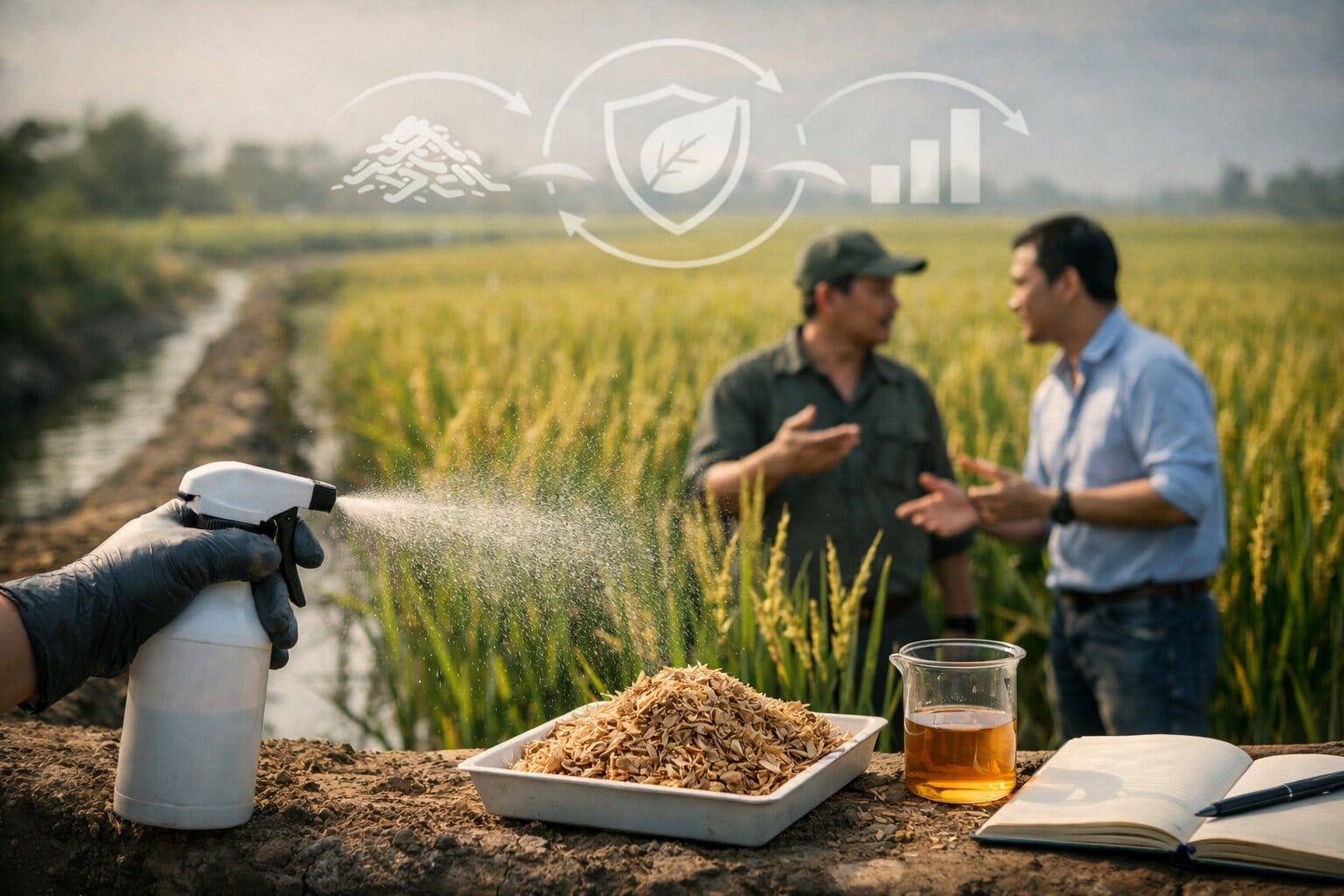
That’s exactly what a recent field demonstration in Vietnam is claiming for a foliar-applied biostimulant derived from agricultural residues: treated rice plots produced 688.7 kg per 10 ares (0.1 ha) versus 482.8 kg per 10 ares in untreated plots—an uplift of 205.9 kg per 10 ares, or ~43%.
Translated into the units farmers, lenders, and policymakers care about, that’s roughly 6.89 t/ha vs 4.83 t/ha—an incremental ~2.06 t/ha—and an estimated profit increase of ~VND 40.2 million per hectare under the trial’s conditions. The study also claims the economic return was more than six times the cost of applying the biostimulant.