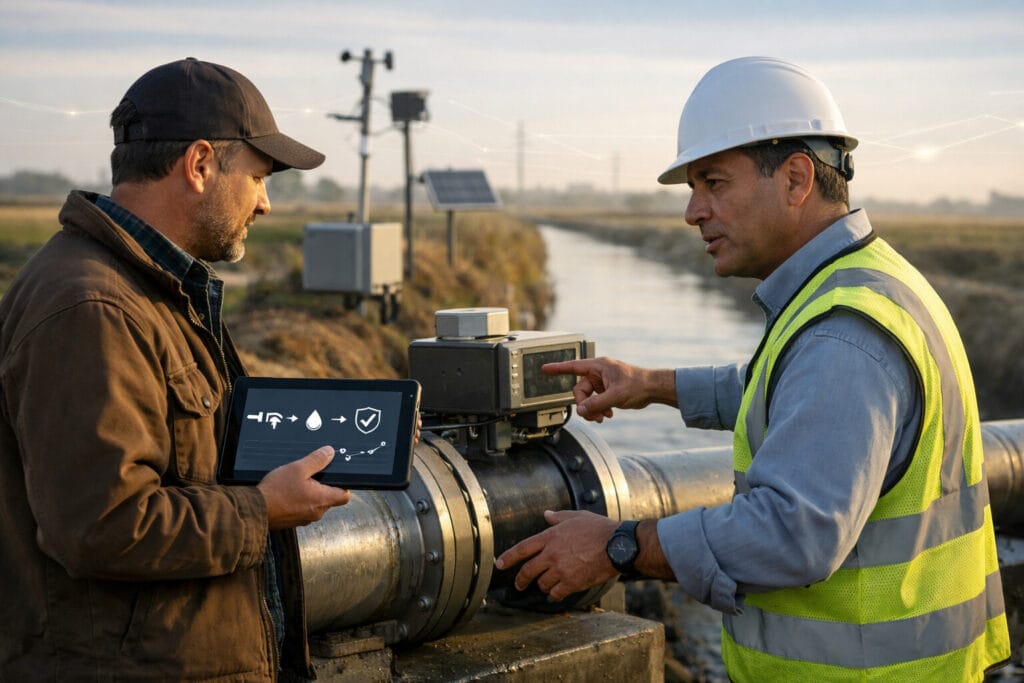
In southern Idaho, an irrigation district installed four flow meters and discovered something awkward: a big gap between the water it thought it was delivering and the water it was actually pumping. The shortfall was about 35%—enough to turn a “nice-to-have” monitoring upgrade into a financial and political necessity. The metering work later fed into a wider modernisation effort, with an official estimate that 18,733 acre-feet a year—about 6.1bn gallons—could stay in the Snake River instead of leaking away through dirt ditches.
That story is becoming a template. Across irrigated agriculture, funding is shifting from building things you can point at—pipes,